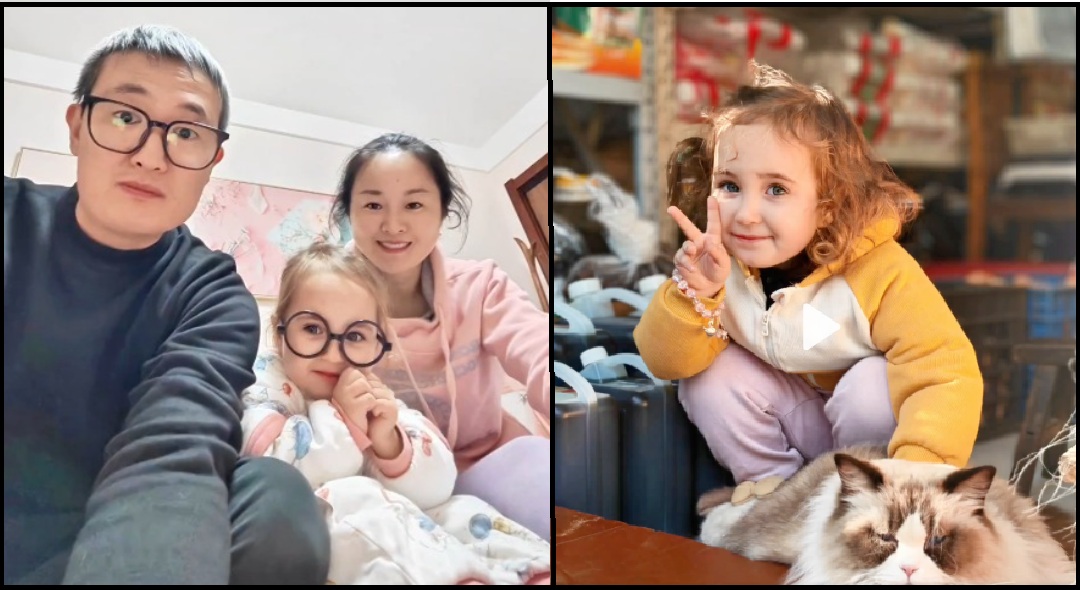

China (Jiangsu), Dec 7 : What began as a routine childbirth in Jiangsu province turned into a moment of shock and disbelief for doctors and family members alike, after a newborn baby girl displayed features completely unexpected for her parents. Born to a Chinese couple with typical East Asian features—dark hair and dark eyes—the baby arrived with striking blonde hair and bright blue eyes, leaving the delivery room momentarily silent.
Medical staff and relatives were stunned by the dramatic contrast, as no one in the immediate family shared similar European traits. The unusual appearance quickly raised questions and anxiety among the parents, who feared a possible hospital mix-up.
DNA Test Ends Swap Fears, Reveals Deeper Mystery
To resolve the uncertainty, the couple promptly ordered a DNA paternity test. The results were conclusive: the child was biologically theirs. While this ruled out any possibility of a baby swap, it deepened the mystery of the infant’s rare features.
With confusion still lingering, the family began tracing their ancestry in search of an explanation. Their investigation led to a surprising discovery— the baby’s great-grandfather had Slavic, specifically ethnic Russian, roots. Because several generations in the family lineage had only male offspring, the genetic traits associated with that ancestry had remained hidden for decades.
The baby’s blue eyes and fair hair, experts explained, were the re-emergence of this long-dormant genetic inheritance.
Scientists Cite Rare “Atavism” Phenomenon
Genetic specialists have described the case as a likely example of atavism, a rare biological occurrence in which traits from distant ancestors reappear after skipping several generations. In such cases, long-suppressed genes become active again, producing unexpected physical characteristics.
Scientists note that atavism is extremely uncommon, occurring in only a small fraction of births worldwide. This rarity adds to the intrigue surrounding the Jiangsu baby, whose story has now captured global attention online.
A Living Example of Genetic Surprise
The extraordinary case serves as a powerful reminder of the unpredictability of human genetics. What appeared at first to be an alarming medical mystery eventually turned into a remarkable family revelation—one that reconnects the newborn to a hidden chapter of her ancestral past, nearly a century old.
As the story continues to circulate online, the “blue-eyed baby of Jiangsu” stands as a living example of how deeply and unexpectedly our genetic histories can surface.