
Gangtok, May 9 : Three lives are gone. A mother. Two unborn children who never drew their first breath. And behind that loss stands a husband and father, Swarup Chettri , who had spent fifteen years hoping for exactly this pregnancy — and who must now bury not one grief but three.
The death of Sweta Karki, following the loss of her unborn twins at Sir Thutob Namgyal Memorial (STNM) Hospital in Gangtok and her subsequent passing at Neotia Hospital in Siliguri, has shaken Sikkim in a way that goes beyond the immediate tragedy of one family. It has forced the state to confront an uncomfortable question it has been reluctant to answer squarely: how safe is the healthcare that its citizens depend upon?
We must be careful here. The allegations of negligence — delayed response, inadequate attention during a critical period — have come from the family, through a video that went viral and understandably aroused public emotion. The hospital’s version of events has not been placed in the public domain with equal clarity. A government inquiry is now underway, and it would be improper for any responsible commentator to pronounce guilt before that process concludes. Due process matters — for the family seeking justice, and equally for the medical personnel whose conduct is under scrutiny.
WHAT THE GOVERNMENT HAS DONE
To its credit, the Sikkim government moved with unusual speed. Within two days of public outrage reaching a peak, the Health and Family Welfare Department formed a departmental inquiry committee on May 8. The very next day, May 9, the Home Department escalated further, constituting a statutory Inquiry Commission under the Commission of Inquiry Act, 1952 — a significantly more serious instrument than a routine departmental review.
The commission is chaired by a senior IPS officer, N. Sridar Rao, Director General of Police (Vigilance and Anti-Corruption), and includes medical experts from multiple institutions. It has been given fifteen days to submit findings and is empowered to fix accountability. On paper, this is a robust response.
The question is whether it will translate into genuine accountability — or become another exercise in institutional self-preservation dressed up as transparency.
WHAT MUST BE HONESTLY EXAMINED
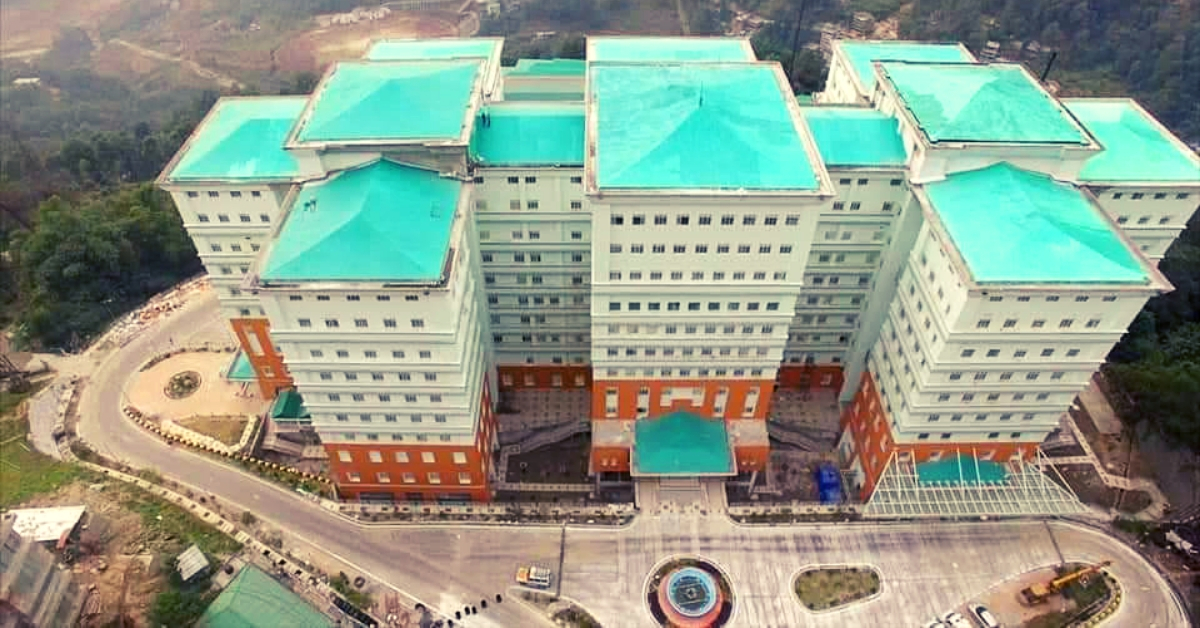
STNM Hospital is the state’s primary public healthcare institution. It serves patients who, in large part, have no alternative. For families from remote districts like Gyalshing, a referral to Siliguri is not a simple matter — it is an arduous journey, expensive and exhausting, undertaken when all else has failed. When a hospital at that critical juncture is alleged to have fallen short, the consequences are not merely medical. They are existential.
This is not the first time such allegations have surfaced against STNM. Previous incidents have circulated on social media over the years, raising persistent concerns about protocols, staffing, and responsiveness in the hospital’s wards. Each time, public outrage fades. Each time, the systemic questions go unanswered. The Sweta Karki case must not follow that pattern.
The inquiry commission must examine not just whether individual doctors or nurses erred on a particular night, but whether the institution has the systems, the supervision, and the culture of accountability that prevents such errors. Were obstetric protocols in place and enforced? Was the gynaecology ward adequately staffed? Was the referral decision made in time, and was it managed correctly? These are institutional questions, not merely personal ones.
A CALL FOR TRANSPARENCY, NOT JUST PROCESS
Sikkim’s citizens deserve more than a report submitted to a competent authority and quietly filed away. The findings of the Inquiry Commission should be made public. If negligence is established, the accountability measures recommended must be implemented visibly and verifiably — not diluted through administrative discretion. If the commission finds that the hospital acted within acceptable standards, that finding too must be communicated clearly and credibly to a public that has lost trust.
There is also a broader obligation. The state must take this moment as a prompt to audit the readiness of STNM Hospital — its staffing ratios, its emergency response protocols, its referral systems, and its mechanisms for internal complaint and correction. Reactive inquiry must give way to proactive reform.
IN CONCLUSION
Swarup Chettri’s family deserves answers, not just process. Sweta Karki deserved better care than she allegedly received. And the thousands of Sikkimese who walk through the gates of STNM every year deserve the assurance that their lives will be treated with the seriousness and skill that medicine demands.
Fifteen years of waiting. A few days of despair. And now, a lifetime of loss.
The least this state can do — the very least — is ensure that the truth is found, that accountability is real, and that no family is made to grieve this way again.
The sequence of events, details, names, dates, and official actions documented in this editorial are drawn entirely from published reports available in the public domain. Readers who wish to verify the accuracy of specific details — dates of admission, referral timelines, official notifications, or the composition of inquiry bodies — are encouraged to compare against primary source material, as anomalies, if any, may exist between various reports. This editorial makes no claim beyond what has been reported, and it neither supplements nor embellishes those accounts.