
New Delhi, March 16 : Thirteen years is a long time to hold on to hope. For the Rana family of Ghaziabad, it was also long enough to know when to finally let go.
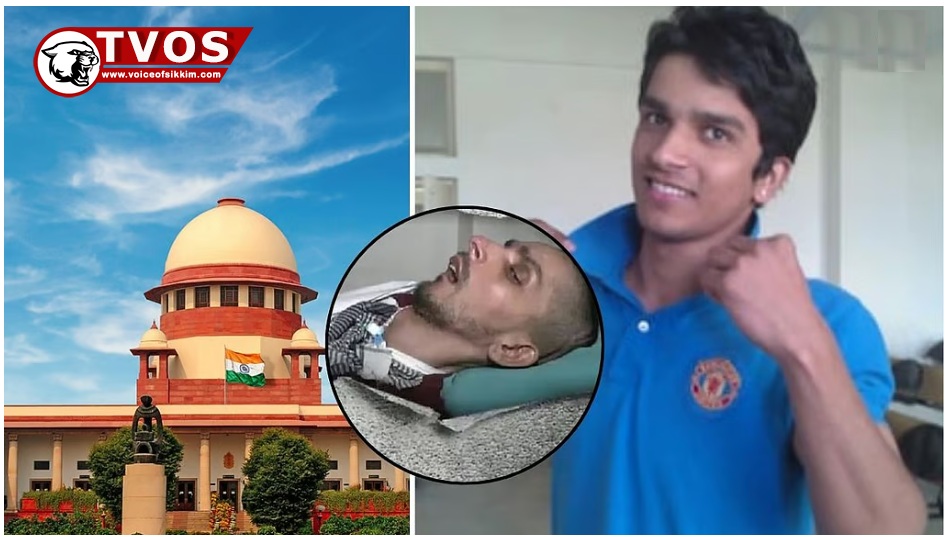
In what legal and medical circles are now calling a watershed moment for India, the Supreme Court has authorised the withdrawal of life-sustaining treatment for Harish Rana — a young man who has not been conscious since a devastating fall from a building in 2013. He was a student when the accident happened. The brain injuries he suffered that day were catastrophic and irreversible, leaving him in a permanent vegetative state, wholly dependent on assisted feeding and continuous medical intervention to stay alive.
For more than a decade, his parents stood by him. They cared for him, consulted doctors, and waited. But medicine offered no road back. Eventually, his father made the extraordinarily difficult decision to approach the courts — not to abandon his son, but to spare him what the family described as a prolonged, undignified existence sustained only by machines and tubes.
The Supreme Court bench, after careful deliberation, agreed.
What the Court Actually Decided
The ruling permits passive euthanasia — a legal and ethical distinction that is worth understanding clearly. This is not the administration of any substance to hasten death. Rather, it involves the gradual and medically supervised withdrawal of artificial life support, allowing the body to follow its natural course. The patient is not killed; treatment that was artificially preventing death is simply discontinued.
This framework is not entirely new in India. The Supreme Court had previously recognised, in its landmark 2018 judgment in the Aruna Shanbaug case and subsequent rulings, that the right to die with dignity falls within the ambit of Article 21 of the Constitution — the fundamental right to life and personal liberty. What makes the Harish Rana case significant is that it represents one of the first tangible, real-world applications of that framework, moving the principle from courtrooms and legal texts into actual clinical practice.
What Happens at AIIMS
Following the court’s approval, Harish Rana was transferred to the All India Institute of Medical Sciences in New Delhi. There, a multidisciplinary medical team — including palliative care specialists — took charge of the process.
The protocol is deliberate and tightly regulated. Life-sustaining interventions, such as clinically assisted nutrition and hydration, are withdrawn in stages. Palliative care professionals remain closely involved throughout to ensure the patient experiences no unnecessary distress. The emphasis is on comfort, monitored closely and compassionately, until natural death occurs.
It is a process designed as much for human dignity as for medical compliance.
The Weight Carried by a Family
Cases like this rarely make it to court without years of quiet, invisible suffering beforehand. The Rana family’s story is one shared, in different forms, by thousands of families across India who find themselves caring for loved ones locked in long-term comas — emotionally, physically, and financially drained, yet unable to find a legal or ethical exit from a situation that offers no recovery.
Harish’s father, in his petition to the court, did not speak the language of law. He spoke the language of exhaustion and love — of a parent who had tried everything and was now asking for mercy on behalf of a son who could no longer speak for himself.
The court heard that. And it responded.
Why This Case Matters Beyond the Family
The Harish Rana ruling has opened a serious national conversation — one that India has been slow to have — about end-of-life care, advanced medical directives, and what it truly means to respect human dignity in its final chapter.
Legal experts note that while the passive euthanasia framework has existed on paper since the Supreme Court’s earlier rulings, institutional hesitancy and procedural uncertainty had made real-world implementation rare. This case sets a clearer precedent and may encourage hospitals, families, and courts to engage more openly with these decisions rather than default to indefinite life support out of legal caution or social discomfort.
Medical ethicists, meanwhile, point to the case as a reminder that modern medicine’s capacity to keep the body alive has far outpaced society’s ability to grapple with whether it always should.
A Closing Thought
There is no easy way to frame the death of a young man who never got to finish growing up. The Harish Rana case is, at its core, a tragedy — one that began with a fall from a building and ends thirteen years later in a hospital in Delhi.
But within that tragedy, there is also something that might, carefully, be called justice. Justice for a man whose dignity the law chose not to overlook, and for a family whose grief the courts chose to acknowledge.
India’s legal system does not often move quickly on questions this delicate. In this instance, however slowly it arrived, the answer it gave was a humane one.
This article is intended for informational purposes and does not constitute legal or medical advice.