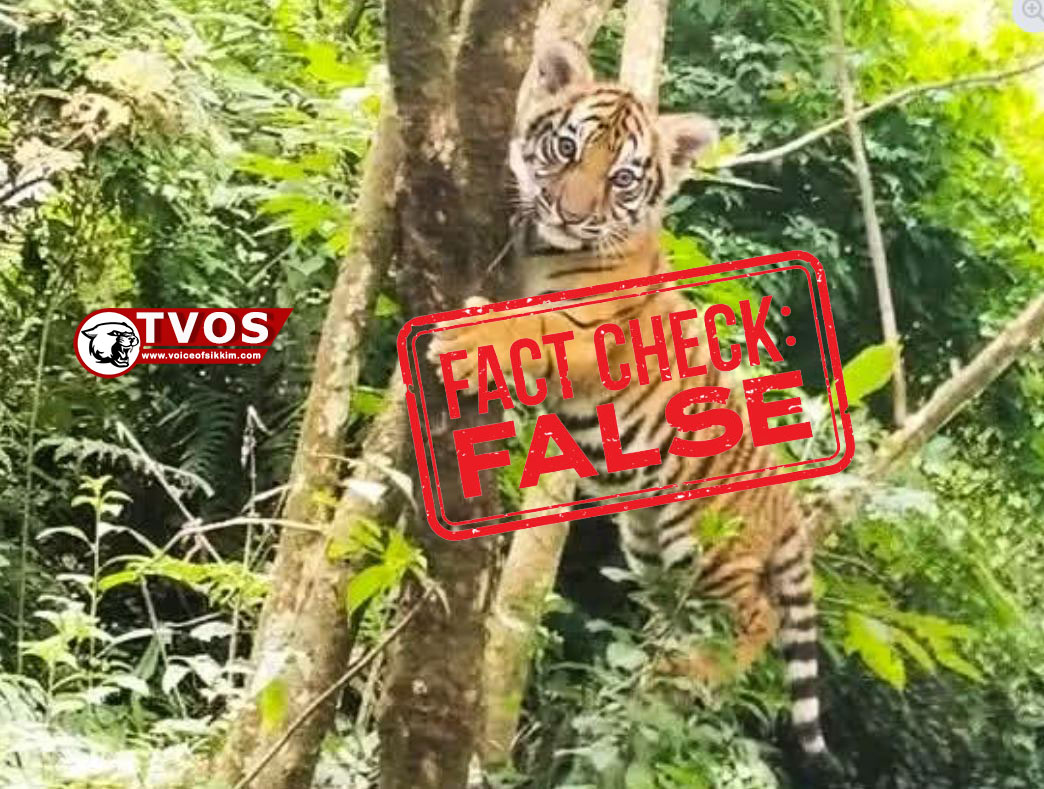

Gangtok, Dec 6 : Just when people thought they could finally spot a real tiger near the capital, Artificial Intelligence once again played prankster-in-chief—and Sikkim fell for it, hook, line, and pixel. An AI-generated image of a Royal Bengal tiger cub recently went viral across social media, sending villagers, officials, and WhatsApp uncles into full wildlife-alert mode.
The image was widely shared with claims that a student had photographed a tiger cub near a forest edge close to Gangtok. In no time, local reports described it as a rare real-life wildlife sighting, and panic spread faster than the internet signal. By evening, villagers reportedly stayed indoors, while forest officials rushed to the area in search of a tiger that, it turns out, existed only in digital imagination.
Adding spice to the confusion, another AI-generated image also surfaced around the same time, showing a tiger cub near a school compound. Both images made rounds on Facebook pages and countless WhatsApp groups, complete with dramatic captions and alarmist forwards.
Some viral posts even confidently claimed that the cub had been photographed in the Chongay forest, just 8 km from Gangtok, allegedly by a schoolchild on December 2. Forest officials and even local leaders responded swiftly—unaware that they were responding to Google Gemini’s artistic creativity rather than real wildlife movement.
This is not the first time such digital drama has unfolded. On 15 August 2025, police and forest officials had arrested two youths from Yaramal village in the Nandi Hills area for circulating morphed AI images of a tiger and a leopard, which had caused widespread fear among villagers. The latest images now appear to follow the same deceptive pattern.
Subsequent fact-checking using AI-detection tools confirmed that the viral tiger cub images were entirely AI-generated, not original photographs. Two versions were traced—one showing a cub climbing a tree and another sitting near a house pavement—both digitally manufactured.
Once again, AI created the tiger, people created the panic, and officials created the response—all for an animal that never existed.
Statutory Public Advisory
The public is strictly advised not to treat any photo, video, or viral message as genuine unless it is officially verified and fact-checked by competent authorities. Sharing unverified digital content can create unnecessary panic, mislead authorities, and attract legal action under relevant cyber and misinformation laws. Citizens are urged to act responsibly on social media and verify information before forwarding.