
New Delhi, March 10 : The Union Government has invoked the Essential Commodities Act (ECA), 1955, to regulate the production, supply, and distribution of natural gas across India, as the ongoing conflict between the US-Israel alliance and Iran continues to threaten energy supply chains in West Asia.
The Ministry of Petroleum and Natural Gas issued the order on March 9, stating that the government considers it necessary to regulate production, sector-wise allocation, and distribution of natural gas, including LNG and re-gasified LNG, to ensure equitable distribution and continued availability for priority sectors.
WHAT TRIGGERED THE MOVE
The conflict escalated after Israel and the US attacked Iran on February 28, prompting India to activate emergency provisions to address potential energy supply disruptions. The government assessed that the ongoing conflict has affected LNG shipments through the Strait of Hormuz, with international suppliers invoking force majeure clauses and diverting gas supplies.
West Asia accounts for approximately 49 to 55 percent of India’s total crude oil imports and nearly 70 percent of its gas, with 40 to 50 percent of crude oil passing through the Strait of Hormuz, which is currently facing a naval blockade.
THE FOUR-TIER PRIORITY FRAMEWORK
Under the Natural Gas (Supply Regulation) Order, 2026, the government has established a structured priority system for gas allocation.
Priority 1 sectors, including domestic piped natural gas supply, compressed natural gas for transport, LPG production, and pipeline compressor fuel, are to receive 100 percent of their average past six-month gas consumption.
Priority 2 covers fertiliser plants, which are to receive 70 percent of their past six-month average consumption.
Priority 3 and 4 direct gas supply to tea industries, manufacturing units, and other industrial and commercial consumers connected to the national gas grid or City Gas Distribution networks, to be maintained at 80 percent of past six-month average consumption.
REFINERY DIRECTIVES AND ANTI-HOARDING MEASURES
The Ministry directive requires refiners to channel the entire output of C3 and C4 hydrocarbon streams, including propane, butane, propylene, and butenes, exclusively toward LPG production, supplying these to the three state-run oil marketing companies: Indian Oil Corporation, Bharat Petroleum Corporation, and Hindustan Petroleum Corporation.
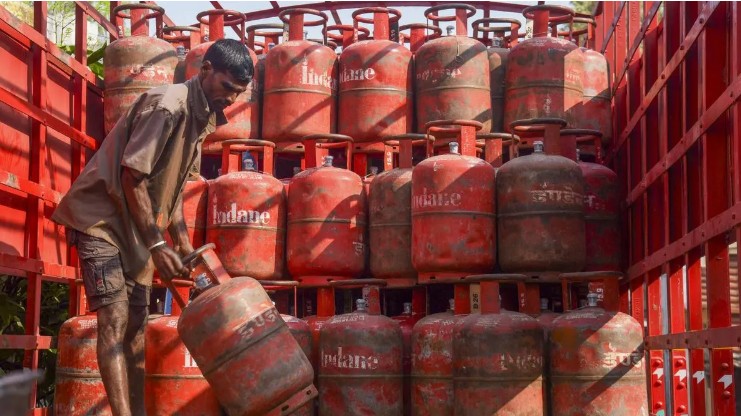
To counter commercial LPG shortages being reported by hotels and restaurants, the government has also introduced a 25-day inter-booking period for fresh cylinder bookings to prevent hoarding and black marketing.
FUEL PRICES AND STRATEGIC RESERVES
A senior government official confirmed that petrol and diesel prices will not be increased for now, with oil marketing companies expected to absorb current cost pressures. The government is closely monitoring global oil markets but has no immediate plan to raise retail fuel prices.
Parliament was also informed that India currently holds storage capacity for crude oil and petroleum products sufficient for 74 days, providing a buffer against further geopolitical disruptions.
BROADER ECONOMIC IMPLICATIONS
Global crude oil prices have surged by nearly 30 percent since the conflict began, pushing Brent crude toward 83 to 100 US dollars per barrel and threatening to widen India’s Current Account Deficit. Additionally, over 400,000 tonnes of Basmati rice are reported to be stuck at ports due to disruptions of trade routes to Saudi Arabia and Iran, while logistics bottlenecks in the Gulf are also threatening to inflate the government’s fertiliser subsidy burden and drive domestic food inflation.
COMPLIANCE OBLIGATIONS
Every producer, importer, transporter, marketer, or distributor of natural gas, including LNG and re-gasified LNG, is required to furnish information relating to production, imports, stocks, allocation, supply, and consumption to the Central Government or any authorised officer. The designated reporting authority is the Petroleum Planning and Analysis Cell.
The order applies to major entities including ONGC, Reliance Industries, Indian Oil Corporation, GAIL India, LNG terminal operators, pipeline operators, and city gas distribution companies.