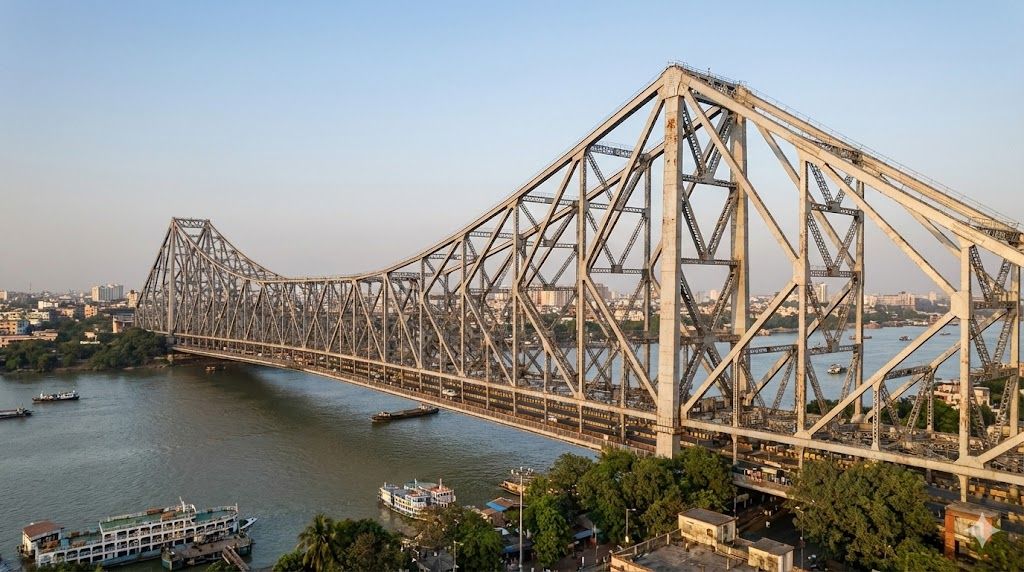

The iconic Howrah Bridge, officially called Rabindra Setu, faces a serious threat from corrosion caused by the frequent spitting of gutka and paan masala. The chemicals in these substances, mixed with saliva, create an acidic residue that sticks to the bridge’s steel framework. Over time, this has sped up corrosion, especially on the pillars and protective steel covers.
Technical assessments conducted over the years have shown concerning deterioration. By 2013, some steel parts had reportedly lost up to 50 percent of their original thickness in affected areas. While the bridge remains structurally sound, this loss of material strength raises long-term safety concerns if preventive measures are not continuously implemented.

In response, engineers and the Kolkata Port Trust have taken steps to protect the bridge. They have installed fiberglass casings around vulnerable areas to shield them from corrosive exposure. Routine cleaning, anti-corrosive treatments, and periodic repainting are in place to slow further damage. These efforts aim to maintain the structural integrity of the cantilever bridge, which has stood strong for over eighty years.
Constructed in 1943, Howrah Bridge is more than just an engineering feat; it is a key symbol of Kolkata’s urban identity. It serves as an important transportation route, supporting thousands of vehicles and pedestrians every day, connecting the city to Howrah across the Hooghly River.
Authorities continue to ask citizens to avoid spitting on the bridge and to respect public infrastructure. Preserving this historic landmark requires not only engineering solutions but also civic responsibility. Without shared awareness and behavior change, even the strongest steel can gradually weaken.