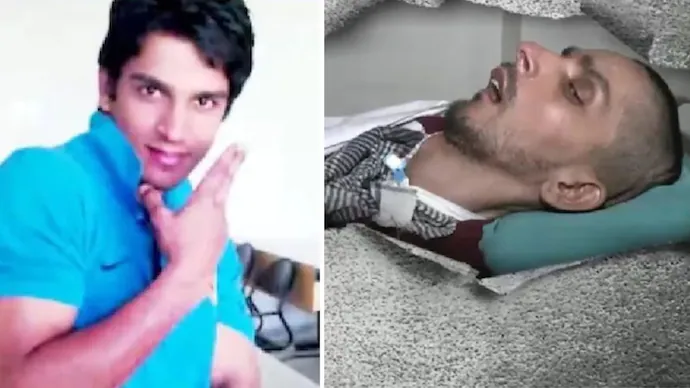

New Delhi, March 11 : In a deeply moving and significant judgment, the Supreme Court of India has granted permission to withdraw life support for Harish Rana, a 31-year-old man from Ghaziabad who has been in a persistent vegetative state for 13 years. Responding to the heartfelt plea of his elderly parents, this ruling allows him to pass away with dignity.
Rana’s tragic journey started in 2013. He was then a bright 20-year-old student at Punjab University when he suffered severe brain injuries after falling from the fourth floor of his accommodation. For over a decade, he has been completely bedridden, depending entirely on a tracheostomy tube to breathe and a feeding tube for nutrition. Despite his family’s unwavering support, medical boards confirmed there was no hope for his recovery.
In delivering this sensitive ruling, a bench made up of Justices JB Pardiwala and KV Viswanathan recognized the significant emotional and physical burden on the family. Reflecting on the weight of the decision, the court quoted Shakespeare’s famous line “to be or not to be” and highlighted that a doctor’s duty to prolong life ends when a patient has no chance of healing.
To ensure a peaceful and respectful transition, the Supreme Court has instructed the All India Institute of Medical Sciences (AIIMS) to admit Rana into palliative care. There, life support will be carefully withdrawn under a specific medical plan focused on his dignity.
Praising his parents’ selfless dedication, the bench stated, “To love someone is to care for them even in the darkest times.”
The court also used this deeply emotional case to encourage the central government to create a law on passive euthanasia. Currently, passive euthanasia in India is only allowed under strict guidelines established during the 2011 Aruna Shanbaug case.