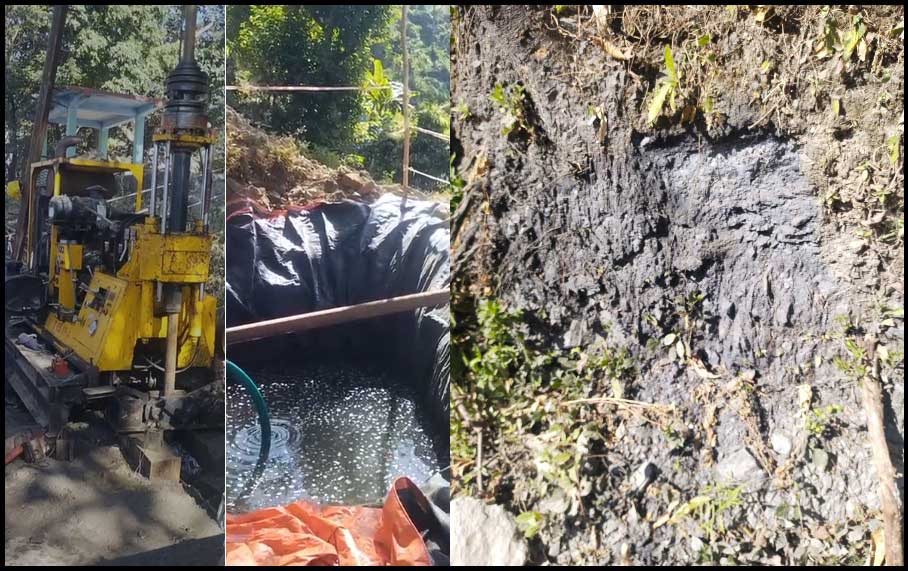

Namchi, Dec 19 : The Mines and Geology Department of the Government of Sikkim has officially commenced a regional coal exploration project across the Namchi district. This initiative, part of a broader mineral assessment program backed by the Government of India, aims to map the state’s hidden energy resources within the Boomtaar–Saleybong–Ghattey Khola and Chisopaney (Nandu Gaon) sectors.
While Sikkim currently has no notified coalfields, the region sits atop the Rangit Tectonic Window, a geological formation known for widespread coal occurrences. Previous studies by the Geological Survey of India (GSI) have already estimated reserves of approximately 1.40 lakh tonnes in the Namchi area.
High-Calorific Potential for Local Energy
Technical records indicate that coal from Reshi, Sikkip, and Nandugaon possesses moderate to high fixed carbon content. Preliminary testing suggests that while the deposits may not support large-scale industrial mining, they offer a sustainable alternative for local consumption.
“Earlier testing by CMPDIL, Ranchi, demonstrated that coal briquettes from Sikkim achieved thermal values significantly higher than firewood,” the department noted, highlighting the potential for cleaner, more efficient domestic fuel.
Precision Drilling and Environmental Safety
To address environmental concerns, officials emphasized that the current phase is limited to regional reconnaissance. Key project details include:
* Non-Invasive Methods: Using narrow 3-to-4-inch boreholes to minimize surface impact.
* Site Restoration: All boreholes will be sealed immediately after data collection to ensure land stability.
* Regulatory Compliance: The project has secured all necessary forest clearances and administrative permissions from the South District administration.
The department clarified that this stage is purely to “establish presence.” Any transition to detailed quality and quantity assessment will depend entirely on the scientific viability of these initial findings.
Beyond Coal: Mapping Sikkim’s Mineral Future
While coal is the immediate priority, geologists are also monitoring the terrain for other valuable minerals. Sikkim’s diverse mineral profile includes:
* Base Metals and Graphite
* Quartzite and Talc
* Dolomite, Limestone, and Sillimanite
Local residents have reported sightings of “black-colored soil” and dark material in landslide debris, which the department is now investigating as part of the broader geological formation study.
The future of the project remains tied to a balance of scientific data and environmental stewardship. “Findings from this exploration will determine the next course of action, guided by existing mineral governance frameworks and environmental sensitivity,” officials stated.