
New Delhi, April 4: A shocking revelation has shaken the global mountaineering community. Investigators have uncovered a massive insurance fraud linked to expeditions on Mount Everest, involving nearly ₹165 crore.
Every year, wealthy adventurers from around the world travel to Nepal with dreams of climbing Everest. For many, the ascent is about prestige as much as excitement. Given the extreme conditions, these climbers depend on experienced local guides to navigate the risky terrain.
Authorities now say that this trust was taken advantage of.
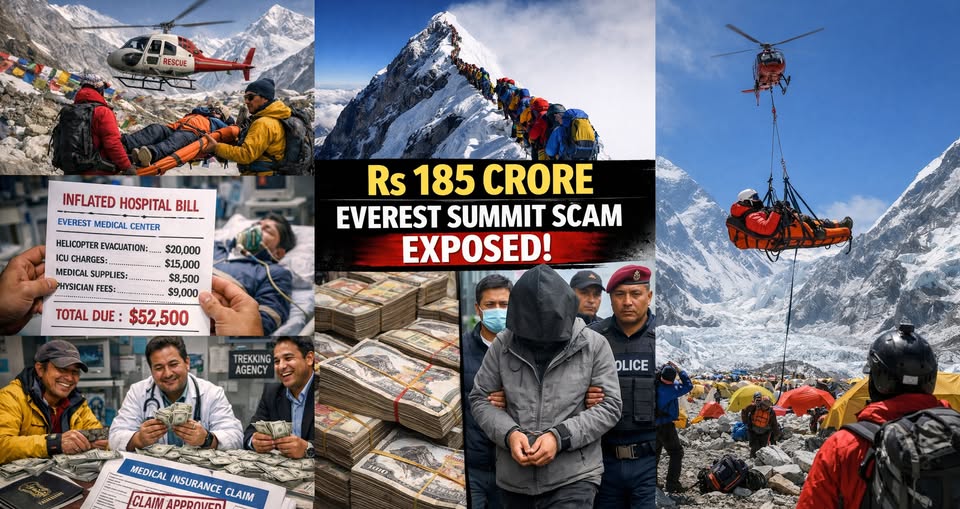
Investigators found that tourists were regularly asked about their health insurance coverage before the climb. At high altitudes, symptoms like nausea, dizziness, and fatigue are common. However, in many cases, guides allegedly exaggerated these conditions, warning climbers of life-threatening risks and pressuring them into immediate evacuation.
With no road access at such heights, helicopters were used to airlift tourists to designated hospitals. Once admitted, they underwent a series of extensive medical tests—often unnecessary—leading to inflated bills that were claimed from insurance companies.
What first seemed like isolated incidents soon revealed a troubling pattern. Over the past three to four years, more than 150 climbers are believed to have been targeted in a similar way. A detailed police investigation has now identified fraudulent insurance claims at around ₹165 crore.
The investigation has also uncovered more disturbing allegations. Some guides are suspected of intentionally making climbers ill by contaminating their drinking water with substances like baking soda, causing symptoms that justified emergency evacuation.
Officials state that the scam involved a coordinated network of trekking guides, hospital staff, and helicopter company employees, rather than just a few individuals. So far, 32 people have been arrested in connection with the case.
Importantly, a vigilant Nepali youth group, Gen Z Deshbhakt, first brought the issue to authorities’ attention, leading to a thorough investigation.
This incident raises serious questions about oversight in high-altitude tourism and the safety of climbers in extreme environments. It also highlights the increasing importance of citizen-led efforts to expose complicated frauds.
As Everest continues to attract dreamers from around the world, this scandal serves as a sobering reminder that even the highest peaks are not beyond the reach of human greed.