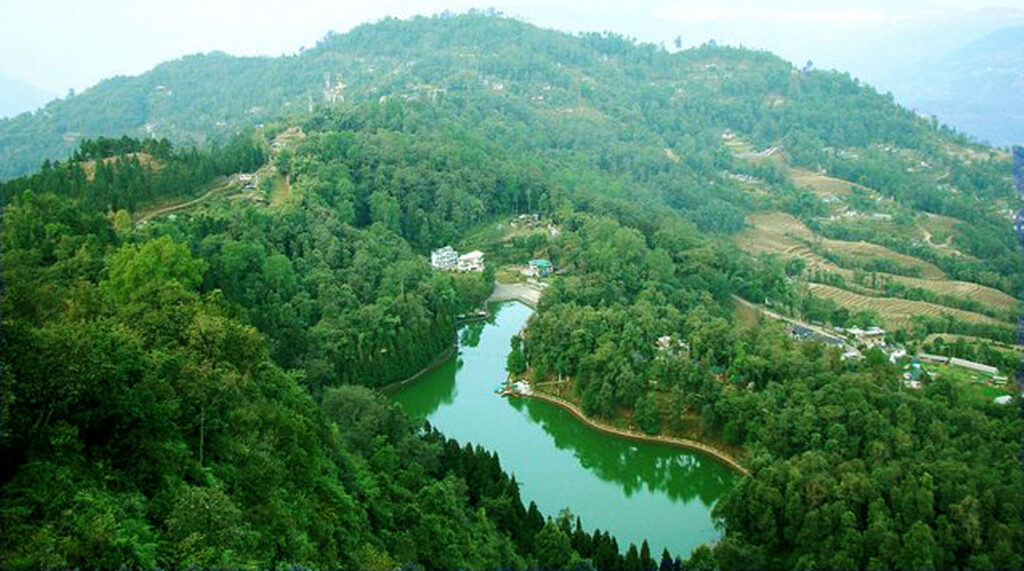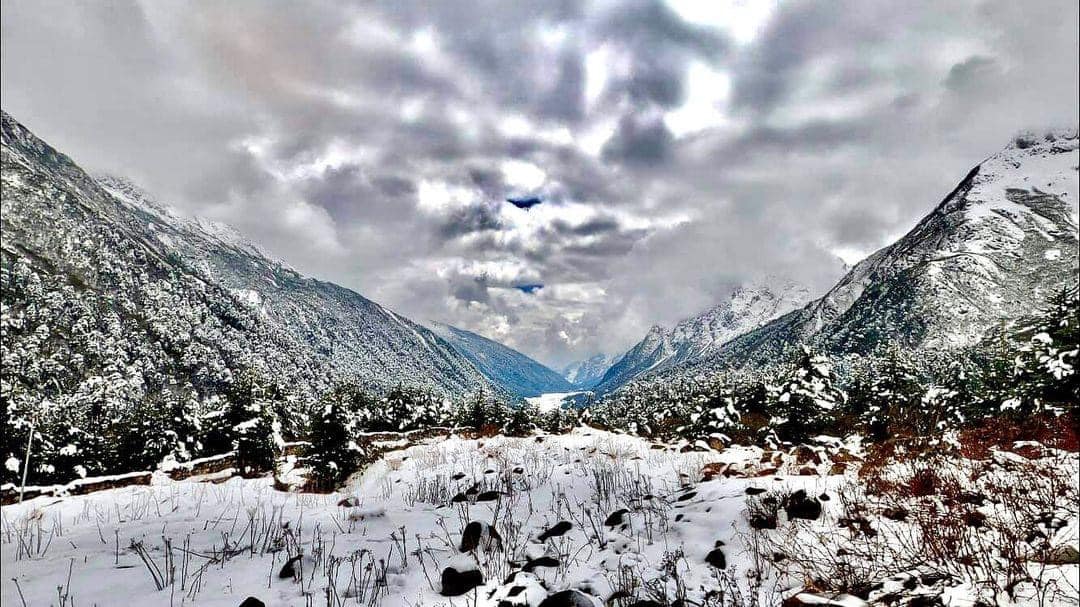

Pakyong, 24 Feb : A landmark initiative set to transform the tourism landscape of Sikkim by bringing every household into the fold of a booming industry. Nestled in the lap of the Eastern Himalayas, Sikkim has long been celebrated as one of India’s most prized tourism destinations. From the snow-draped crown of Kanchenjunga, the world’s third highest peak, to the emerald valleys of Yuksom, the cerulean waters of Tsomgo Lake, and the terraced cardamom gardens of Dzongu, this small but magnificent state draws travellers from across the globe in search of something the modern world rarely offers anymore: raw, unfiltered natural beauty. Now, a new service is poised to ensure that this beauty does not merely attract visitors but genuinely transforms the lives of every Sikkimese family it touches.
The Sikkim Homestay Directory is being launched as a comprehensive, community-centred platform that will catalogue, connect, and promote homestay accommodations across every district of the state, from urban Gangtok to the remotest corners of North Sikkim. The initiative is being hailed by tourism stakeholders, local entrepreneurs, and community leaders as one of the most inclusive and timely interventions in the state’s tourism ecosystem in recent memory.
The Tourism Pressure Point: Why Homestays Are No Longer Optional
Sikkim receives its peak tourist footfall broadly across two major windows, spring from March to May, when rhododendrons paint the hillsides in vivid crimson and pink and the skies clear for breathtaking Himalayan views, and autumn from October to December, when post-monsoon freshness settles over the valleys and festivals that bring cultural vibrancy to the fore. During both these seasons, the state witnesses an extraordinary surge in visitor numbers that its existing hotel infrastructure simply struggles to absorb.
Travellers arriving in Gangtok, Pelling, Lachung, or Ravangla during peak season frequently find themselves scrambling for accommodation, facing inflated hotel rates, fully booked properties, and the frustrating experience of travelling to one of the world’s most beautiful places while being unable to find a dignified place to rest. The gap between tourism demand and formal accommodation supply has been widening for years. The Sikkim Homestay Directory directly addresses this gap, not by building new infrastructure from scratch, but by unlocking the enormous potential that already exists inside the homes of Sikkim’s people.
What Makes a Homestay in Sikkim Truly Special?
A homestay in Sikkim is not merely a room with a bed. It is an experience that no five-star hotel, however luxuriously appointed, can replicate. Imagine waking up to a window framed by rhododendron forests and the distant silhouette of Kanchenjunga catching the first light of dawn. Imagine sitting at a family table and being served gundruk soup, steaming dal bhat with locally grown organic vegetables, freshly made sel roti, or the warming comfort of chhang on a cold mountain evening, all prepared by hands that have carried these recipes through generations. Imagine the sound of monastery bells drifting through pine-scented morning air, or a host who walks you to a nearby waterfall that has never appeared on any tourist map.
Sikkim is one of India’s first fully organic states, and its ecosystem is among the most sensitively preserved in the subcontinent. The biodiversity here is staggering, with over 600 species of orchids, 700 species of butterflies, ancient yak pastures, glacial lakes fed by snowmelt, and forests that serve as corridors for the elusive red panda and snow leopard. A homestay places the traveller not on the periphery of this ecosystem as an observer, but gently within it as a guest, experiencing it through the daily rhythms of a Sikkimese family. Children learning to make momo with the host family’s grandmother. Mornings spent helping tend a kitchen garden. Evenings listening to folk songs by the fireside. This is the irreplaceable texture of a homestay experience, and it is something Sikkim possesses in extraordinary abundance. For the eco-conscious, culturally curious, and experience-driven traveller that increasingly defines global tourism trends today, Sikkim’s homestays are not a budget alternative. They are the premium product.
The Directory: An Opportunity Knocking at Every Door
What distinguishes the Sikkim Homestay Directory from previous tourism initiatives is its foundational philosophy, that tourism opportunity should not be concentrated in the hands of a few large hotel operators, but distributed across every household willing to participate. Establishing a hotel demands significant capital investment, land, regulatory compliance, staffing infrastructure, and years of operational build-up that remains out of reach for the vast majority of Sikkimese families. A homestay, by sharp contrast, requires none of that at the same scale. A spare room, a welcoming disposition, clean facilities, home-cooked food, and genuine hospitality, that is the starting capital. The investment is minimal. The returns, when channelled through a well-organized directory platform, can be meaningful and sustained.
The Sikkim Homestay Directory will function as a structured, searchable, and regularly updated listing of verified homestay providers across the state, accessible to tourists planning their trips both domestically and internationally. Each listing will carry details of location, room availability, facilities, pricing, host family background, cuisine offered, and nearby attractions, giving travellers the confidence to book with certainty and hosts the visibility to attract steady guests. Critically, this is an opportunity that can run parallel to existing livelihoods. A government employee, a farmer, a teacher, a shopkeeper, any individual or family can register their homestay and begin generating supplementary income without abandoning their primary occupation. It is a genuinely flexible economic opportunity, ideally suited for family-team participation where every member, from parents managing guest logistics to younger members handling digital communication, can contribute meaningfully.
Reshaping the Tourism Ecosystem: The Broader Impact
The launch of the Sikkim Homestay Directory carries implications that extend well beyond individual households. It has the potential to fundamentally reshape the state’s tourism ecosystem in several significant ways. Geographical decentralization of tourism is perhaps the most transformative outcome. Today, tourist footfall in Sikkim remains heavily concentrated in a handful of well-known destinations, Gangtok, Pelling, Namchi, and the Lachung corridor. Vast tracts of Sikkim, remote villages in West Sikkim, the hidden valleys of North Sikkim, the rural expanses of South Sikkim, remain largely unvisited not because they lack appeal, but because they lack visible accommodation infrastructure. The directory will place these communities on the tourist map for the first time, drawing footfall to new areas, reducing pressure on already-crowded hotspots, and creating entirely new circuits of exploration for visitors seeking authentic, off-the-beaten-path experiences.
Sustainable tourism gets its most powerful enabler yet. Sikkim has consistently positioned itself as a champion of responsible, eco-sensitive tourism. Homestays are inherently sustainable, they consume less energy, generate less waste, employ local supply chains for food and services, and create direct economic linkages with the surrounding community rather than leaking revenue out of the local economy the way large chain hotels often do. Every guest who stays at a homestay is, in effect, investing directly into a Sikkimese family’s livelihood. The multiplier effect, from the vegetables purchased from a neighbour’s farm, to the local guide hired for a trek, to the handloom shawl bought from the host’s relative, creates a dense web of community-level economic activity that no centralized hospitality model can generate at the same depth.
Livelihood security and economic resilience for families across Sikkim stand to improve substantially. For communities in remote areas where agricultural income is seasonal and uncertain, and formal employment opportunities are limited, a homestay registered on the directory provides a reliable supplementary income stream timed perfectly to tourist seasons. For women in particular, who form the backbone of household hospitality in Sikkimese culture, this represents a significant avenue for financial participation and empowerment within the comfort and safety of their own homes and communities. Cultural preservation receives an unexpected ally. As tourism increasingly rewards authenticity, Sikkimese families who open their homes to guests have a powerful incentive to preserve and celebrate their cultural traditions, their cuisine, their festivals, their folk arts, their traditional architecture. The homestay becomes a living museum of Sikkimese culture, ensuring that globalization does not quietly erode what makes Sikkim irreplaceable.
For Every Stakeholder, Shoulder to Shoulder
The success of the Sikkim Homestay Directory will ultimately depend on a collaborative ecosystem of stakeholders working in alignment. The state government has a critical role in providing streamlined registration processes, training support for homestay operators in hospitality standards and digital literacy, and quality certification frameworks that build tourist confidence. Tourism boards and promotional bodies must ensure the directory receives robust marketing reach, both through domestic tourism campaigns and international travel platforms. Financial institutions and microfinance organizations have an opportunity to step in with accessible, low-threshold loan products for families looking to upgrade their homestay facilities. And the traveller community must be encouraged to choose homestay experiences consciously, understanding that their booking choice carries genuine social impact.
For individual Sikkimese families, the message of this initiative is straightforward and powerful: the landscape outside your window is an asset. The meal you cook every morning is an experience someone across the world would pay to share. The culture you live every day is something tourists travel thousands of miles to understand. The Sikkim Homestay Directory is the bridge that connects this latent value to the global tourism market.
A Futuristic Avenue, Built on Ancient Foundations
Sikkim’s natural beauty is not a resource that needs to be manufactured or marketed with artifice. It simply needs to be shared, responsibly, inclusively, and sustainably. The Sikkim Homestay Directory represents a mature understanding of this truth. It is not a scheme built on grand capital investment or distant corporate interest. It is built on the most abundant resource Sikkim has always possessed: the warmth, pride, and resilience of its people. As sustainable tourism reshapes the global travel industry and travellers increasingly seek meaning over luxury, Sikkim, with its organic landscapes, its multi-ethnic cultural richness, its Buddhist monasteries and Hindu temples standing in harmonious proximity, and its unmatched Himalayan grandeur, is perfectly positioned to lead this new era. The Homestay Directory is not merely a service launch. It is the opening of a door, and behind it lies a future where every family in Sikkim can stand at the threshold of the world’s travel imagination and say, with complete legitimacy: Welcome. Come in. This is Sikkim.
The Sikkim Homestay Directory is open for registrations visit https://www.voiceofsikkim.com/register-homestay/ . Families and individuals across all six districts (Gangtok, Pakyong, Mangan, Gyalshing, Namchi, Soreng) of Sikkim interested in enrolling their homestay are encouraged to register through this web-portal and become part of Sikkim’s most inclusive tourism movement.