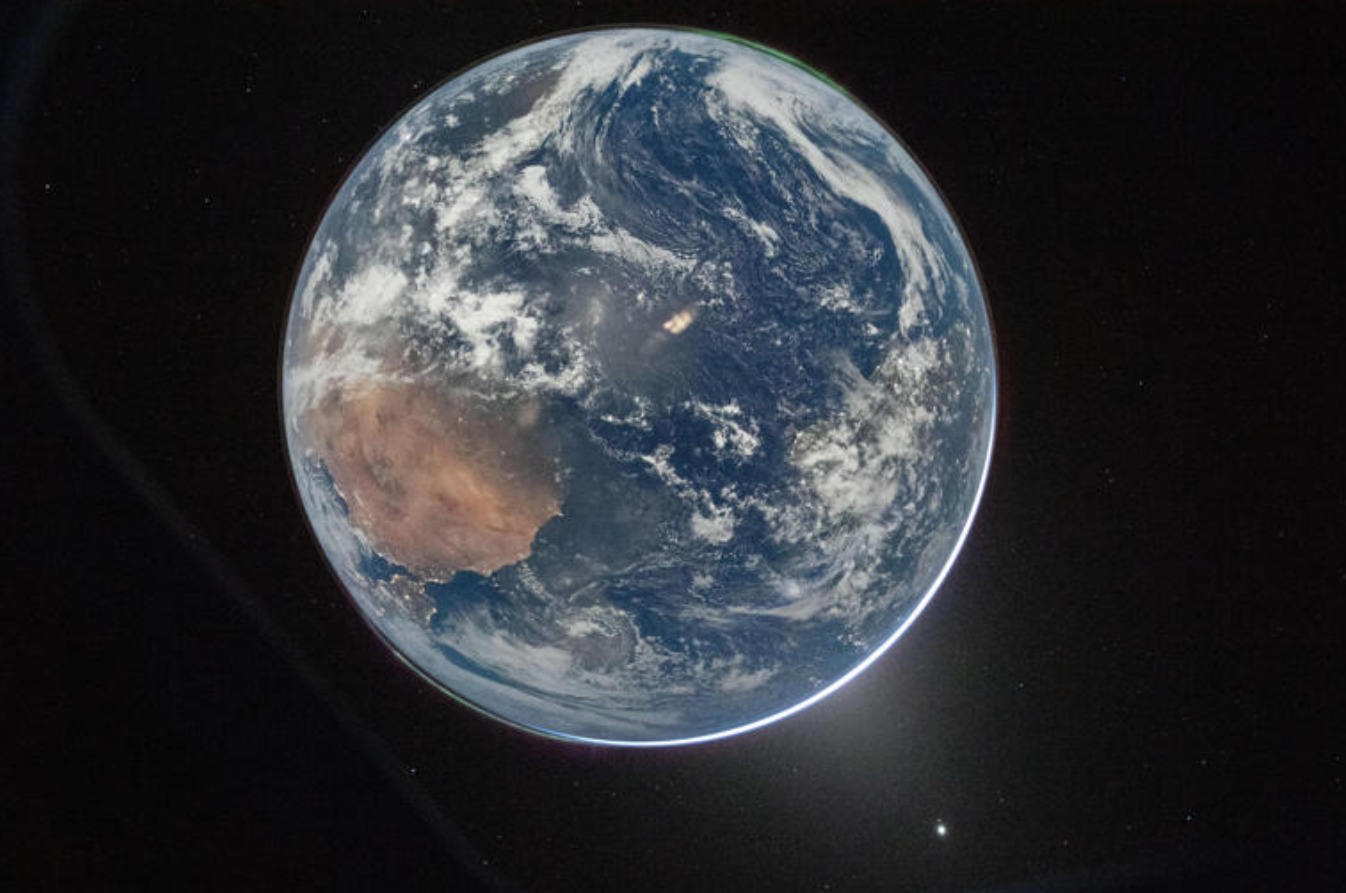

Pakyong, April 3 : In a moment that feels both historic and deeply human, NASA has released the first images of Earth captured by astronauts aboard the Artemis II mission—and they are nothing short of stunning.
Taken from the Orion spacecraft as it journeyed beyond Earth’s orbit, the images show our planet glowing in rich blues and browns, with a rare green aurora shimmering across its atmosphere. The photographs mark the first visuals sent back by the crew as they head toward the Moon, offering a perspective few humans have ever witnessed.
What makes these images especially powerful is their timing. They were captured shortly after the spacecraft completed a crucial engine burn that pushed it out of Earth’s orbit and onto a lunar trajectory. From this vantage point, Earth appears both vast and fragile—floating quietly in the darkness of space.
Astronaut Reid Wiseman, who commanded the mission, clicked the now-iconic shots through Orion’s window. One of the images shows the full disk of Earth, with continents clearly visible and sunlight reflecting off clouds and oceans. Another captures the planet partially framed by the spacecraft itself, adding a human touch to an otherwise cosmic scene.
The appearance of the green aurora adds an extra layer of wonder. These glowing bands, caused by charged particles interacting with Earth’s atmosphere, are usually seen near the poles—but from space, they create an almost surreal halo around the planet.
The release of these images is more than just a visual milestone. It signals a new chapter in human space exploration. Artemis II is the first crewed mission to venture beyond low-Earth orbit in over five decades, paving the way for future missions that aim to return humans to the Moon—and eventually reach Mars.
For now, though, it’s this simple yet powerful view of Earth that’s capturing global attention. A reminder of where we come from—and how small and connected we all are.