
Gangtok, 16 Jan : The long-awaited entry of Elon Musk’s satellite internet service, Starlink, into the Indian market is edging closer to reality. While excitement builds for high-speed internet beamed directly from space, recent government updates and leaks have clarified exactly what Indian consumers can expect regarding pricing, speed limits, and availability.
The “Connection Limit”: 2 Million Users Only
In a significant regulatory move, the Indian government has reportedly capped Starlink’s initial customer base at 2 million (20 lakh) connections. This decision, communicated by the Union Ministry of Communications, stems from spectrum capacity constraints and a strategy to ensure fair competition with local telecom giants like Jio and Airtel. Authorities view Starlink as a “supplementary” service designed to fill connectivity gaps in rural and remote regions rather than a direct competitor for urban mass-market broadband.
Internet Speed Capped at 200 Mbps
While Starlink’s global infrastructure boasts speeds capable of reaching over 400 Mbps, Indian users will face a speed ceiling. Government officials have stated that the service will be permitted to offer maximum speeds of up to 200 Mbps. This is still substantially faster than many existing rural connections but falls short of the gigabit speeds offered by urban fiber providers.
Price Check: Premium Connectivity
Pricing has been a major point of speculation. Despite a brief, likely erroneous website listing that showed a monthly fee of ₹8,600, industry reports and government statements suggest a more localized pricing strategy:
* Monthly Subscription: Likely to be around ₹3,000 per month.
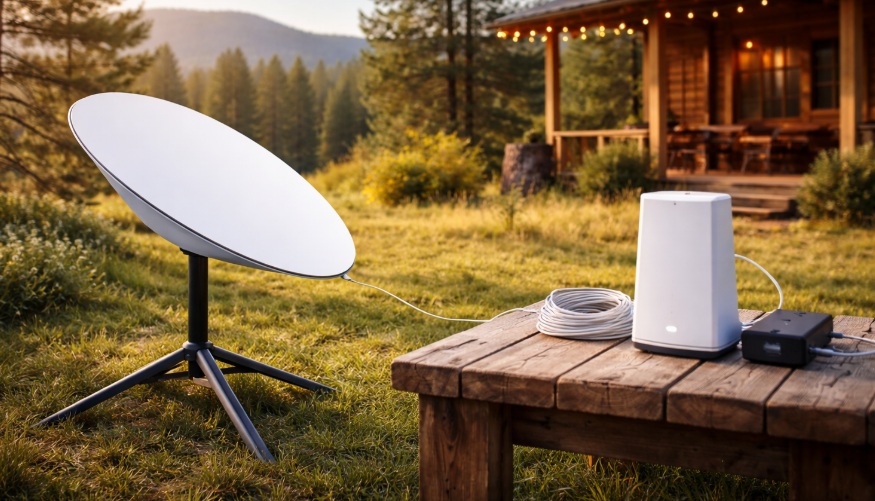
* One-Time Hardware Cost: Users will need to purchase a receiver kit (dish and router), expected to cost between ₹33,000 and ₹34,000.
This price point positions Starlink as a premium service in India, costing roughly three to five times more than standard fiber plans from local operators.
Release Date: When Can You Sign Up?
As of January 2026, Starlink has received key approvals, including its Global Mobile Personal Communication by Satellite (GMPCS) license. However, the official commercial launch is pending final spectrum allocation and security clearances from the Department of Telecommunications (DoT). While no specific date is locked, industry insiders expect the service to go live later this year, following the resolution of these final regulatory hurdles.
The Tech Behind the Service
Starlink continues to aggressively expand its constellation. In early January 2026, SpaceX successfully launched additional “V2 Mini” satellites to bolster network reliability. Furthermore, the company announced plans to lower the orbit of its satellites in 2026 to improve space safety and reduce debris risks—a move that aligns with its preparations for a robust Indian rollout.