Kathmandu, August 26: A massive Nepal flash flood that surged into Rasuwa district from the Tibet side on Wednesday morning has killed at least nine people and caused widespread destruction across settlements, roads, bridges and hydropower infrastructure near the Nepal-China border.

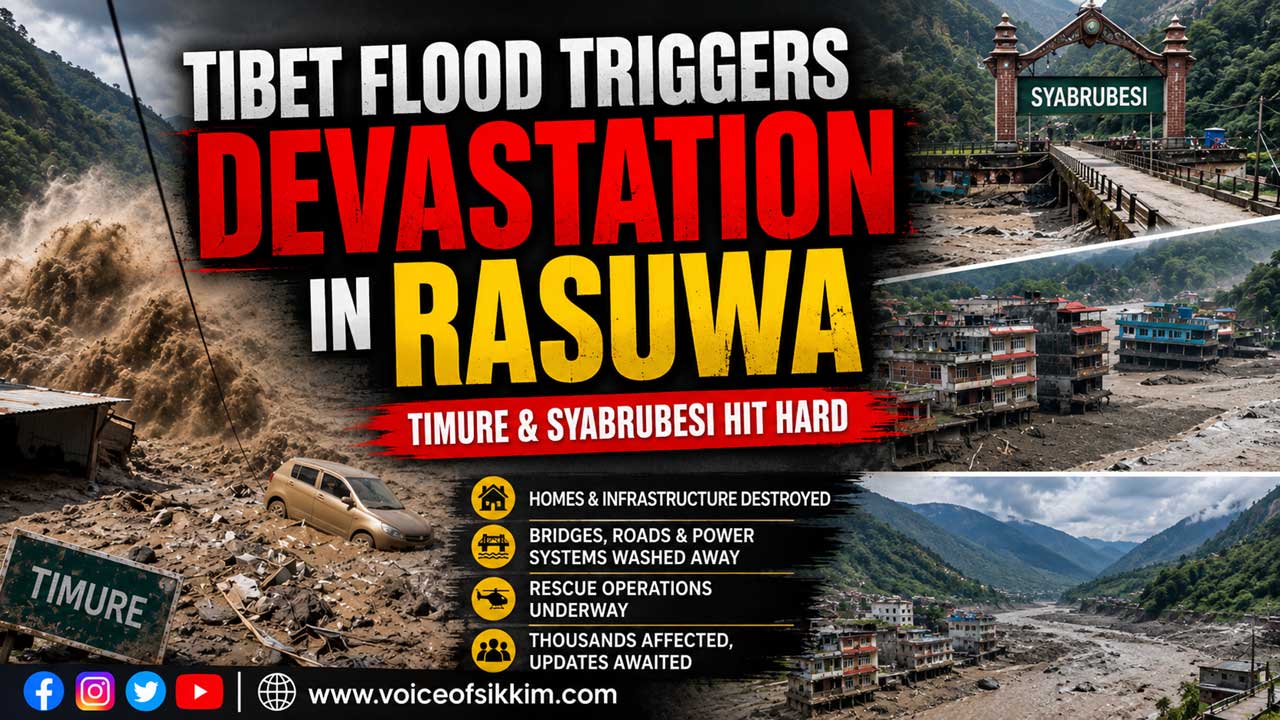
The sudden flood entered the Bhote Koshi River from Tibet at around 9 am before moving downstream into the Trishuli River. Timure and Syabrubesi in Rasuwa were among the worst-hit areas, with homes, market areas, roads and other infrastructure sustaining extensive damage.
Early reports from the disaster zone indicate that several settlements and infrastructure project sites were swept away. Police posts at Timure, Syabrubesi and Rasuwagadhi were also damaged, while the full extent of casualties and property losses remains under assessment.
The disaster has also dealt a major blow to Nepal’s power infrastructure. Hydroelectric projects in the affected corridor were damaged or forced offline, disrupting around 430 MW of generation capacity, equivalent to more than 12 percent of Nepal’s hydropower capacity.
Flood Moves Downstream, Communities Warned
As the enormous volume of water moved from the Bhote Koshi into the Trishuli, authorities issued warnings for communities downstream.
By Wednesday afternoon, the flood had reached the Galchhi area of Dhading and was expected to move towards Muglin. Residents living close to the Trishuli River were advised to leave vulnerable riverbank settlements and move to higher ground.
Authorities also warned about possible disruption along major road corridors, including the Prithvi Highway and Muglin-Narayanghat road.
Areas in Rasuwa, Nuwakot, Dhading, Gorkha and Chitwan were placed on alert as authorities monitored the movement of the flood downstream.
Rescue Operations Intensified
The Nepali Army, Armed Police Force and Nepal Police have been mobilised for search, rescue and relief operations, while helicopters and additional emergency personnel have been deployed to the affected region.
However, the scale of destruction and damage to communication infrastructure has complicated efforts to establish the situation in some of the worst-affected communities.
Nepal Telecom has also introduced free telecommunications services in flood-affected areas to help residents and rescue teams maintain contact during the emergency. The assistance covers Rasuwa, Nuwakot, Dhading and Chitwan.
What Caused the Rasuwa Flood?
The precise cause of the disaster remains under investigation.
Initial assessments by scientists have focused on the possibility that an ice avalanche blocked the Lhende River in the high Himalayan region before the accumulated water broke through the natural obstruction, releasing a massive surge downstream.
Authorities are also examining whether a glacial lake outburst contributed to the disaster.
Other preliminary reports have linked the Bhote Koshi flood to an avalanche in Tibet. However, scientists and authorities continue to examine satellite imagery and other data, meaning the exact sequence of events has yet to be conclusively established.
The disaster highlights the vulnerability of Himalayan communities to sudden cross-border floods. Rivers originating in the Tibetan plateau can carry floodwaters into Nepal with little warning, leaving downstream settlements with limited time to evacuate.
Authorities Urge Continued Vigilance
With rescue operations continuing and the full extent of the destruction still emerging, authorities have urged people in vulnerable areas to stay away from riverbanks, avoid unnecessary travel through flood- and landslide-prone areas and follow official safety advisories.
The immediate priority remains locating missing people, rescuing those stranded, treating the injured and providing food, shelter, drinking water and other essential supplies to displaced families.
The casualty figure and damage assessment could change as rescue teams gain access to isolated areas and authorities receive more information from the disaster zone.
Visuals