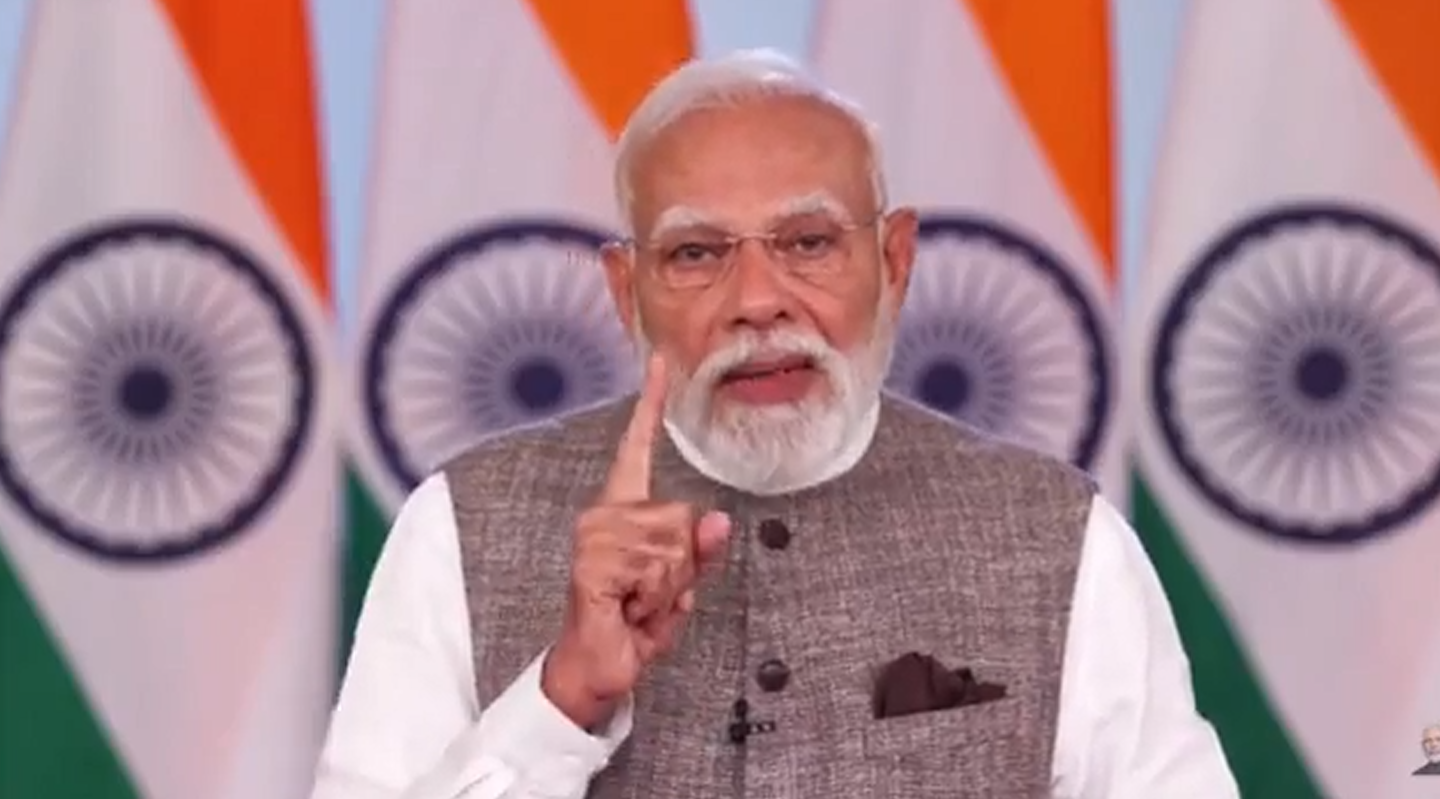

Gangtok, April 18 : In a rare and emotionally charged address to the nation on Saturday evening, Prime Minister Narendra Modi broke his silence over one of Parliament’s most dramatic legislative defeats — the fall of the Constitution (131st Amendment) Bill, 2026, which sought to reserve 33% of Lok Sabha seats for women.
Speaking at 8:30 PM via video conferencing, Modi opened with an apology. “Despite our best efforts, we haven’t succeeded. Amendments could not be made in the Nari Shakti Adhiniyam. I apologise to all the mothers and sisters of this nation,” he said, setting the tone for what followed — a pointed, unflinching assault on the opposition.
The bill, which proposed expanding Lok Sabha strength from 543 to 816 seats and linking women’s reservation to a delimitation exercise based on the 2011 Census, fell short of the required two-thirds majority — 298 voted in favour, 230 against. Opposition parties, including Congress, TMC, DMK, and the Samajwadi Party, maintained they support women’s reservation in principle but rejected the delimitation linkage.
Modi was unapologetic in his counterattack. He labelled Congress “anti-reform” and the Samajwadi Party “anti-women’s reservation,” and accused dynastic parties of fearing empowered women because it would threaten their family-run political structures. “A woman may forget many things, but she never forgets an insult,” he declared, warning that the opposition will face electoral consequences for its vote.
Earlier in the day, before the address, Modi had also chaired a Cabinet Committee on Security meeting to review India’s preparedness amid the ongoing West Asia crisis — signalling that the address was not merely political theatre, but set against a backdrop of active national security deliberations.
The defeat marks a significant political inflection point ahead of 2029. With the NDA framing itself as the guardian of women’s political rights and the opposition battling the narrative of being obstructionist, the battlelines for the next election cycle are already being drawn — on the floor of Parliament and in living rooms across the country.