
Pakyong, April 3 Think about the last time your internet slowed down. Frustrating, right? Now imagine that slowdown lasting not for a few minutes, but for weeks — and the cause wasn’t your router or your ISP. The cause was a war being fought thousands of kilometres away, beneath the waters of the Persian Gulf.
That’s not a scene from a thriller novel. That’s the very real risk India is sitting with right now.
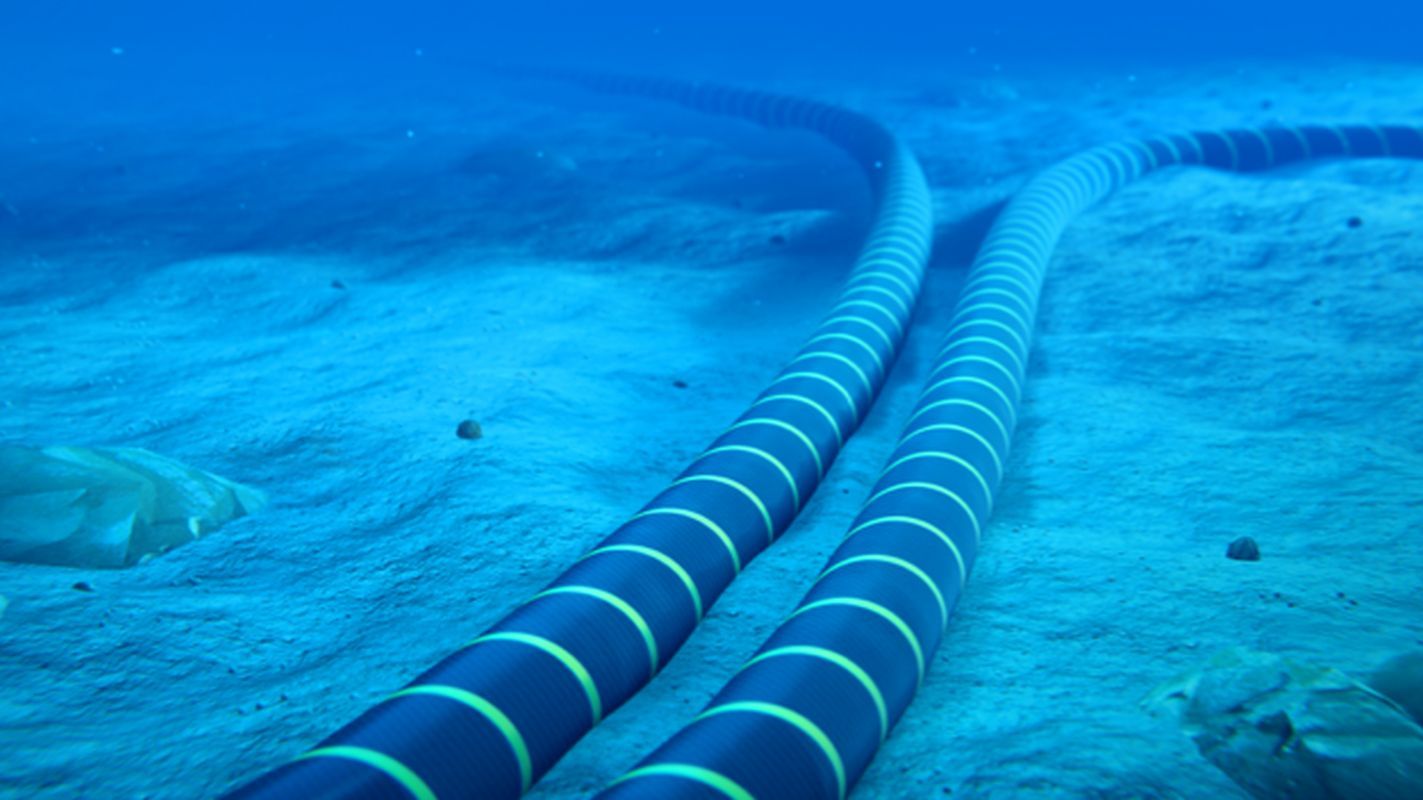
Most people assume the internet travels through satellites. It doesn’t — not primarily, anyway. The truth is that somewhere around 95 percent of the world’s international data traffic moves through a vast web of fibre-optic cables laid across the ocean floor. These submarine cables are the silent, invisible arteries of the global digital economy. Every email you send abroad, every international video call, every cross-border banking transaction, every cloud-based service your company relies on — it all runs through these cables. And a significant chunk of those cables run directly through two of the most volatile maritime zones on the planet right now: the Red Sea and the Strait of Hormuz.
With the ongoing US-Iran conflict having turned both these waterways into active conflict zones simultaneously — something experts note has never happened before in recorded history — the question of what happens to India’s internet is no longer a distant hypothetical. It’s a live operational concern that India’s telecom regulator TRAI and the Department of Telecommunications are already drawing up contingency plans for.
The Geography of Our Digital Vulnerability
India currently has 17 submarine cables coming ashore across 14 landing stations. Almost all of these are concentrated along the western and southern coastline — Mumbai, Chennai, Cochin, Tuticorin, Trivandrum. Major cable systems like SEA-ME-WE 4, I-ME-WE, FALCON, and EPEG connect India to Europe, the Middle East, and Southeast Asia by passing through exactly the waters now at risk of deliberate or accidental damage.
This isn’t a new vulnerability. As recently as September 2025, a commercial vessel dragging its anchor severed multiple cables in the Red Sea, causing immediate disruption to internet services across South Asia, parts of Africa, and the Middle East. Four major cable systems — including the South East Asia–Middle East–Western Europe 4 and the Europe India Gateway — were damaged in that single incident. Repair efforts stretched over months, because even in normal times, finding and fixing an undersea fault is a painstaking, expensive operation. In a conflict zone, it’s nearly impossible.
Now factor in that the Houthi movement in Yemen — which has expanded its military role as the conflict intensifies — has openly threatened to target Red Sea cable infrastructure. And repair ships are simply not sailing into active war zones. This is the situation India’s digital backbone currently faces.
The exposure isn’t limited to individual users either. Every major Indian telecom operator — Reliance Jio, Bharti Airtel, Tata Communications, Vodafone Idea — routes international traffic through these same cable corridors. A serious disruption wouldn’t just slow down Instagram reels. It would impact financial settlement systems, cloud services that businesses depend on, IT operations supporting global clients, and the kind of real-time data flows that modern supply chains and enterprise operations run on.
TRAI’s own chairman has been candid about the structural weakness here. India hosts just one percent of the world’s subsea cable landing stations. Singapore, by contrast, has 26 cables across three sites. That imbalance is not an abstract statistic — it translates directly into how exposed India is every time something goes wrong along these cable routes.
The Fix India Has Been Deferring
The honest answer to all of this is that India has known about this vulnerability for years and has moved slowly on addressing it. A confidential government study reportedly proposed building dedicated cable repair vessels at a cost well under Rs 4,000 crore — a fraction of what a single metro rail project costs. The study exists. The working groups exist. The Navy apparently has vessels that could be converted for this purpose. What hasn’t happened is the final procurement decision.
Meanwhile, the threat environment has only worsened.
On the brighter side, there are meaningful moves being made. Google CEO Sundar Pichai announced in February 2026 a major investment in India’s subsea infrastructure, including a new international gateway in Visakhapatnam on the east coast and three new cable routes connecting India to Singapore, South Africa, and Australia. This is significant because it begins to break India’s near-total dependence on the western corridor through the Gulf — the Vizag gateway, built with Airtel and AdaniConneX, routes around the Arabian Sea danger zone entirely. Meta’s Project Waterworth is reportedly looking at the same Visakhapatnam facility as a landing point.
These are welcome developments. But Google’s infrastructure, however impressive, creates its own form of dependency. Replacing a geographic concentration risk with a single-company concentration risk is an improvement, but not a complete solution. India’s regulatory framework, which has historically made the country a difficult destination for cable investment, also hasn’t fundamentally changed yet.
What This Actually Means for You
Let’s bring this down to ground level.
If the cables in the Red Sea or the Strait of Hormuz experience significant damage in the coming weeks or months, India is unlikely to face a total internet blackout. The architecture has redundancies, and about 40 percent of traffic moves eastward through Chennai toward Singapore and the Pacific — a safer route. But congestion on surviving cable systems would be severe. Services would slow. Latency would spike. Cloud-dependent applications would become unreliable. International business calls would drop. Payments routed through global financial messaging systems could face delays.
For India’s IT sector — which runs an enormous volume of work for global clients — even a week of degraded connectivity is costly in ways that are hard to fully calculate. For the average consumer, it would feel like a sustained, country-wide bad signal day with no clear end date.
The deeper issue is that this crisis is forcing a conversation India should have had years ago. Digital infrastructure isn’t just a tech sector concern — it’s a national security concern, an economic concern, and increasingly a geopolitical leverage point. Submarine cables are, as one cybersecurity expert put it, the digital equivalent of oil pipelines. And just as nations protect their energy infrastructure, they need to protect their data infrastructure with equal seriousness.
What Needs to Happen
Three things stand out as genuinely urgent. First, India needs to accelerate its cable repair vessel procurement — not defer it again. A country of 1.4 billion internet users cannot rely entirely on foreign vessels to repair its own undersea infrastructure. Second, diversifying cable landing points away from the western coast concentration is critical — the Vizag development is a step in the right direction but needs to be treated as the beginning of a broader eastern corridor strategy, not a one-off announcement. Third, and perhaps most importantly, India needs to seriously invest in building satellite internet into its national connectivity architecture as a genuine backup layer — not as a rural novelty, but as a national resilience tool.
The Meghalaya-Starlink MoU signed earlier this week is a small but meaningful signal. Satellite internet doesn’t go through the Strait of Hormuz. It doesn’t care about Houthi threats or naval blockades. A Low Earth Orbit satellite constellation overhead is indifferent to what’s happening on the ocean floor. That’s not just a technology feature — in the current geopolitical climate, it’s a strategic asset.
The ocean floor has become a battlefield. India’s response needs to be proportionate to that reality — and it needs to start now, not after the next cable goes dark.